
Athletes train hard. The difference between staying in the game and sitting on the sidelines often comes down to one thing: recovery.
At Red Light Boutique: A Photobiomodulation Clinic, we work with athletes across multiple disciplines who are using red light therapy for injury healing, muscle recovery, inflammation reduction, and performance optimization.
From Division I competitors to recreational athletes who simply love their sport, the results are clear — when recovery improves, performance follows.
What Is Red Light Therapy? (And Why Athletes Use It)
Red light therapy (also called photobiomodulation therapy) uses specific wavelengths of red and near-infrared light to penetrate tissue and stimulate mitochondrial activity inside cells.
In simple terms:
It increases ATP (cellular energy), reduces inflammation, improves circulation, and accelerates tissue repair.
For athletes, this translates into:
- Faster muscle recovery after training
- Reduced delayed onset muscle soreness (DOMS)
- Improved tendon and ligament healing
- Decreased joint inflammation
- Enhanced tissue resilience
- Better performance sustainability
This is why red light therapy for sports recovery is becoming a staple in elite performance environments.
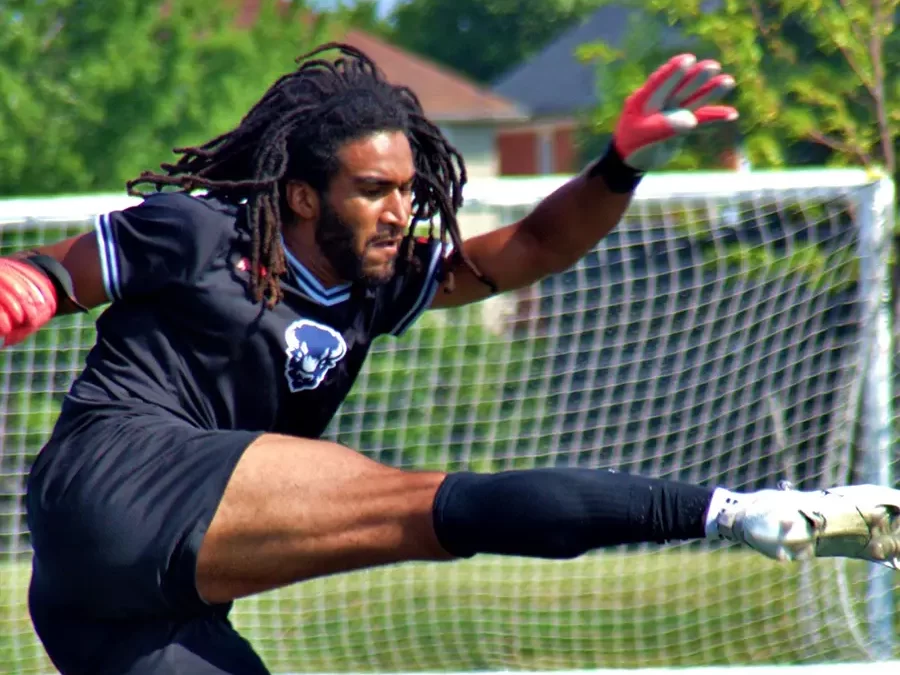
Real Athlete Spotlight: IREAL Daly – Division I Goalkeeper
Division I goalkeeper IREAL Daly of Howard University faced potentially career-ending injuries — including a severe hyperextended sprained ankle and a meniscus tear.
Therapists projected long recovery timelines.
Instead of relying solely on conventional rehab, IREAL integrated the SunPower LED Super Palm into his structured recovery plan. Used consistently alongside physical therapy, mobility work, and strength training, red light therapy became a cornerstone of his rehabilitation.
The outcome?
He exceeded projected recovery expectations and returned to competitive play stronger and more confident.
He later shared his experience on Tom Kerber’s webinar, detailing how red light therapy supported not just injury healing, but daily athletic recovery and preparation.
His case reinforces what research continues to show: supporting cellular repair accelerates structural healing.
Red Light Therapy in Professional and Olympic Athletics
The use of red light therapy in professional sports continues to grow.
Elite teams across football, baseball, basketball, and Olympic training programs have incorporated photobiomodulation into daily recovery protocols. It is used:
- Pre-competition to prime tissues
- Post-competition to reduce inflammation
- During heavy training cycles to prevent overuse injury
Olympic athletes, endurance competitors, and strength athletes use red light therapy for:
- Muscle recovery
- Injury prevention
- Soft tissue repair
- Performance longevity
But it isn’t reserved for professionals.
Athletes We Serve at Red Light Boutique
At Red Light Boutique, we have worked with:
- Golfers managing chronic back and elbow strain
- Soccer players recovering from ankle and knee injuries
- Curlers addressing repetitive shoulder stress
- Dancers supporting joint integrity and muscle repair
- Cricket players managing impact-related inflammation
- Runners treating tendonitis and shin splints
- Swimmers improving shoulder mobility and reducing overuse inflammation
Across disciplines, the feedback is consistent:
Red light therapy improves recovery time, reduces pain, and increases readiness to train.
Whether competing at a high level or playing purely for passion, athletes want to stay active. Recovery makes that possible.
Red Light Therapy for Injury Prevention and Athletic Longevity
As athletes age, inflammation accumulates. Recovery slows. Connective tissue becomes less resilient.
That’s where red light therapy for injury prevention becomes critical.
Older athletes and masters-level competitors are using photobiomodulation to:
- Support collagen production
- Improve joint mobility
- Reduce chronic inflammation
- Enhance circulation
- Maintain competitive capacity
Longevity in sport is not accidental. It is built through proactive recovery strategies.
The Science Behind Red Light Therapy for Sports Recovery
Photobiomodulation therapy has been studied extensively in sports medicine and rehabilitation research.
Here is what peer-reviewed science demonstrates:
1. Increased ATP Production
Red and near-infrared wavelengths stimulate cytochrome c oxidase in mitochondria, increasing ATP production — the energy required for cellular repair.
Reference:
Hamblin, M. R. (2017). Mechanisms and applications of the anti-inflammatory effects of photobiomodulation. AIMS Biophysics.
2. Reduced Inflammation and Oxidative Stress
Studies show measurable reductions in inflammatory markers following photobiomodulation therapy.
Reference:
Leal-Junior et al. (2015). Effect of phototherapy on exercise performance and recovery: A systematic review. Lasers in Medical Science.
3. Improved Muscle Recovery and Performance
Research demonstrates that red light therapy applied before or after exercise reduces muscle fatigue and enhances performance outcomes.
Reference:
Vanin et al. (2018). Photobiomodulation therapy improves muscle performance and accelerates recovery. Journal of Biophotonics.
4. Tendon and Soft Tissue Healing
Photobiomodulation has been shown to enhance collagen synthesis and accelerate tissue repair in tendon injuries.
Reference:
Bjordal et al. (2006). Low level laser therapy for tendinopathy. British Journal of Sports Medicine.
Why Athletes Choose Red Light Boutique
At Red Light Boutique: A Photobiomodulation Clinic, we integrate:
- Targeted red and near-infrared therapy protocols
- Athlete-specific recovery planning
- Evidence-informed application
- Education on long-term injury prevention
From Division I soccer to recreational runners, our focus remains the same:
Support the body at the cellular level. The rest follows.
Key Takeaways
Red light therapy for athletes is not a trend.
It is a science-backed recovery tool.
It supports:
- Injury healing
- Inflammation reduction
- Muscle recovery
- Performance optimization
- Long-term athletic longevity
From IREAL Daly’s comeback story to the golfers, dancers, curlers, runners, swimmers, and soccer players we serve — recovery is no longer passive.
It is proactive. It is strategic. It is measurable.
And it is changing the way athletes heal.
By Blaise Sargeant