
THE MAN WHO WON THE NOBEL PRIZE FOR LIGHT THERAPY
— and died waiting for the world to catch up
BY BLAISE SARGEANT · RED LIGHT BOUTIQUE
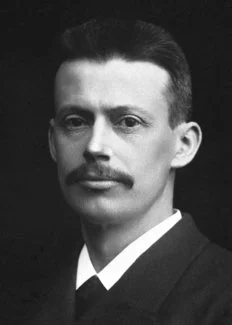
I want to tell you about a man who was dying.
Not quickly. Slowly. The kind of slow that gives you time to think. He was a doctor, he was young, and he had a disease that was stealing his energy a little more every day. He lived in an apartment that faced north. No sunlight ever came through his windows.
One day he moved his chair outside into the sun. And he felt better.
Dr. Niels Ryberg Finsen – Nobel Prize in Medicine, 1903
Now — most of us would just enjoy that. Maybe do it again tomorrow. But this man was Niels Finsen, and he couldn’t leave a question alone. So instead of just sitting in the sun, he started asking why. What is lightactually doing to the body? How deep does it go? Which part of it is doing the work?
He spent years chasing that question. He built his own equipment. He tested wavelengths. He figured out that blood blocks light from penetrating skin — so he designed a way to press the blood out of the tissue first before treating it. He concentrated light fifteen times its natural intensity. He was doing precision medicine in 1895.
And then he turned that knowledge on one of the most devastating diseases of his time.
A Nobel Prize. A Wheelchair. And a Year Left to Live.
Lupus vulgaris was a form of tuberculosis that attacked the skin — mostly the face and neck. It was disfiguring. Painful. And at the time, completely untreatable. People just lived with it eating away at them. Finsen aimed his concentrated light at it. And it worked.
Within a few years, forty clinics modelled after his had opened across Europe and North America. Patientswere getting better. A whole new branch of medicine was opening up.
In 1903, he was awarded the Nobel Prize in Physiology or Medicine.
He was too sick to go to the ceremony. He sat at home in his wheelchair and received the news surrounded by the people he loved. Less than a year later, he was dead — taken by the same illness that had first made him look at the sun and wonder.
“The disease was responsible for my starting investigations on light: I suffered from anaemia and tiredness, and since I lived in a house facing the north, I began to believe that I might be helped if I received more sun.”
— DR. NIELS FINSEN, 1903
I think about that a lot. The man who gave medicine the gift of light therapy never got to see what it could become. And in a way, neither did we — because what came next set everything back by a century.
Then Antibiotics Arrived. And Light Therapy Vanished.
Penicillin arrived in 1928. Antibiotics are a miracle. They have saved hundreds of millions of lives and I have nothing bad to say about that.
But something else happened when they arrived. Something quieter.
The world fell so completely in love with the pill that it stopped being curious about anything else. The Finsen Institutes slowly closed. The research dried up. Light therapy — this Nobel Prize-winning, scientifically validated, actively working treatment — got quietly pushed to the side.
Not because it stopped working. It never stopped working.
It got pushed aside because you can’t patent sunlight. The entire pharmaceutical business model runs on owning the molecule. And nobody owns light. So when the money went to antibiotics, the research followed. And without research, without funding — light therapy slowly disappeared from mainstream medicine.
The term “photobiomodulation” wasn’t formally adopted until 2014. Finsen died in 1904. We spent over a hundred years unable to agree on what to call the thing he won the Nobel Prize for.
Here’s What Should Have Happened All Along.
PBM and antibiotics were never in competition. They were never doing the same job. Antibiotics go after bacteria. Photobiomodulation works on you — on your cells. It activates the part of your mitochondria that produces energy. It reduces inflammation. It supports tissue repair. It helps your body do what your body is designed to do: heal.
Giving a patient an antibiotic and sending them home is like calling the fire department, letting them put out the fire, and handing the family the key to the burned building. The fire is out. But nobody rebuilt anything. That’s what we’ve been doing. For a hundred years.
The Consequence We’re Living With Now.
Antibiotic resistance is not coming. It’s here. The World Health Organization called it one of the greatest threats to global health. Bacteria evolve. They find ways around the drugs we throw at them, and we are running out of new drugs to throw.
Light doesn’t have that problem. Bacteria cannot adapt to photobiomodulation the way they adapt to a chemical compound. The physics don’t change. In a world where our most powerful drugs are slowly losing the arms race, that is not a small thing. That is everything.
I see it in my clinic. I see clients who have been passed from doctor to doctor, treatment to treatment, and nothing has worked. Chronic wounds. Stubborn inflammation. Pain that has become just a permanent feature of their life. And we use light — the same fundamental principle Finsen proved in 1895 — and something shifts.
That’s not magic. That’s not alternative medicine. That is science that is older than most of the drugs your doctor has ever prescribed you.
We’re Finally Coming Back Around.
Finsen was right. He was right sitting in that sunlit chair outside his north-facing apartment. He was right when he aimed concentrated light at wounds that nobody else could heal. He was right from his wheelchair on the day he should have been standing on a stage in Stockholm.
He just had the terrible luck of being right at exactly the wrong moment in history — right before a pill came along that was so dazzling, so immediately profitable, that the world stopped looking at anything else.
We lost a hundred years.
But the light was always there. Waiting. And we are finally — finally — finding our way back to it.
“The supreme qualities of all science are honesty, reliability, and sober, healthy criticism.”
— DR. NIELS FINSEN, NOBEL ACCEPTANCE, 1903
That’s the standard I bring to Red Light Boutique every single day. Not trends. Not hype. Just the honest work of helping people heal — with a tool that has been proven since before any of us were born.
The light never stopped working. We just stopped using it.
— Blaise Sargeant · Red Light Boutique · Hamilton, Ontario · redlightboutique.ca